
Shore fishing gives you everything a beginning saltwater angler needs: access to real fish, no boat fees, no guide required, and the freedom to fish whenever conditions look right. The coast is always open. This guide covers the gear, locations, rigs, and timing that make shore fishing consistently productive — whether you're standing on a jetty, fishing a grass flat, or working a bridge catwalk.
What you can catch from shore: Striped bass, redfish, flounder, bluefish, speckled trout, pompano, sheepshead, black drum, snook, and more — all regularly caught from accessible shorelines without a boat. The species depends on your region and season.
Why Shore Fishing Is the Best Way to Start
Shore fishing removes every logistical barrier between you and catching fish. No boat ramp, no launch fees, no navigation, no engine maintenance. You drive to the water, walk to the shoreline, and fish. The total cost to get started is under $250 for gear, and most public fishing piers and beaches charge nothing or a small day-use fee.
More importantly, shore fishing works. The idea that fish are only far offshore is a myth. Structure — pilings, rocks, jetty ends, oyster bars, dock edges — holds bait fish, and predators follow. That structure is almost always accessible from shore. A skilled shore angler will consistently out-fish a boat angler who doesn't know where the fish are.
Shore types that produce fish for beginners:
- Sandy beaches — pompano, whiting, stripers, redfish (see our surf fishing setup guide for beach-specific gear)
- Rocky jetties and inlet mouths — flounder, stripers, sheepshead, bluefish; excellent structure
- Grass flats and marshes — redfish and speckled trout in the South; wade or bank fish
- Bridge catwalks — enormous structure that holds stripers, sheepshead, cobia, flounder
- Dock and pier access — elevated position, structure underneath, and access to deeper water
Shore Fishing vs. Surf Fishing: What's the Difference?
Surf fishing specifically refers to fishing from a sandy beach where waves are breaking. It requires a longer rod (10–12 ft) to cast past the wave break and heavier sinkers to hold bottom in the wash. It's a subset of shore fishing.
Shore fishing is the broader category — any land-based position, including jetties, bayfront banks, marshes, docks, and bridge catwalks. These locations often don't require the long surf-specific rod. A 7–8ft medium-heavy spinning combo works for most shore scenarios outside of open-beach surf fishing.
This guide covers general shore fishing. For sandy beach and surf-specific setup, see our Beginner Surf Fishing Setup guide.
Rod & Reel for Shore Fishing
For pier, jetty, flats, and most bayfront shore fishing, a 7–8 ft medium-heavy spinning combo is the versatile workhorse. Long enough to keep line off structure, powerful enough for anything up to a 30 lb fish, and light enough to cast all day without fatigue.

Penn Battle IV Spinning Combo — 7ft Medium Heavy
The go-to beginner saltwater shore fishing combo. Full metal body, sealed drag system, and the proven Penn Battle platform. Get the 3000 or 4000 series for most shore fishing — if you're fishing from beach surf, size up to the 5000 or 6000.
- Full metal body — no flex under load from hard-running fish
- HT-100 carbon fiber drag washers for smooth, powerful stopping power
- 6+1 sealed bearings keep saltwater out of the internals
- Rod and reel sold as matched combo — no guessing about pairing
Premium Option: Shimano Stradic FL

Shimano Stradic FL 4000 Spinning Reel
For anglers ready to invest in a reel they'll use for 10+ years. X-Protect water resistance, Hagane cold-forged gear, and Infinity Drive for reduced cranking effort on big fish. Pair with a 7–8ft medium-heavy rod of your choice.
- X-Protect water resistance — fully sealed for harsh saltwater use
- Hagane gear: cold-forged for vastly smoother and more durable retrieves
- Infinity Drive reduces cranking effort against large, powerful fish
Line and Leader Setup
The standard shore fishing line setup: 20 lb braided main line with a 24–30 inch fluorocarbon leader of 20–30 lb. Braid casts farther, has zero stretch for bite detection, and takes up less reel space. The fluoro leader is nearly invisible underwater and abrasion-resistant against rocks, oysters, and dock pilings.
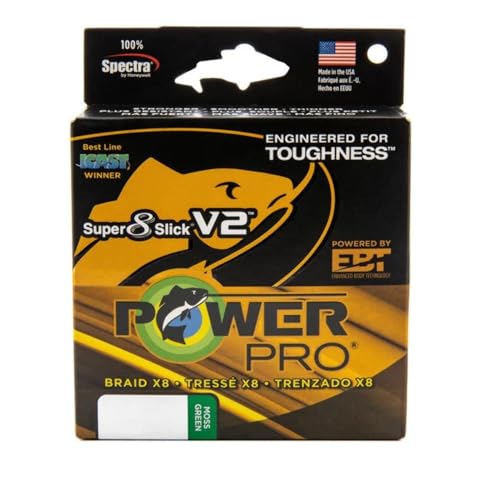
PowerPro Super 8 Slick V2 Braid — 20 lb
Eight-strand construction produces a rounder, smoother braid that casts farther than 4-strand alternatives. Zero stretch means you feel every tap from a flounder or the tick of a striper picking up cut bait. The Super Slick V2 coating also significantly reduces wind knots.
- 8-strand: farther casts, less wind knots than 4-strand
- Zero stretch for immediate bite detection from shore
- High-visibility green or low-vis options available
Reading the Shore — Finding Where Fish Are
The single biggest difference between shore anglers who catch fish and those who don't isn't the rod, reel, or bait — it's knowing where to cast. Fish from shore aren't randomly distributed. They're stacked in very specific places dictated by structure, current, and food availability.
Structure — Jetty ends, oyster bars, dock pilings, bridge shadow lines, and submerged rocks are where bait fish concentrate to hide. Predators cruise the edges and ambush. If you're fishing open flat water with no structure nearby, you're fishing hard mode. Find structure and fish within 20 feet of it.
Current breaks — Where fast-moving water meets still water (an eddy behind a point or rock), bait fish get disoriented and swept into the slower water. Predators hold just downstream of the current break and pick off easy meals. Cast upcurrent and let your bait swing through the transition zone.
Depth transitions — The edge of a grass flat dropping into a channel is a fish highway. Flounder ambush from the sandy edges. Redfish cruise the flat during high tide and move to the deeper edge as the tide drops. Polarized sunglasses reveal these transitions that are invisible to the naked eye.
Shade and light lines — At night, lighted docks and bridge lights create sharp shadows. Stripers, snook, and speckled trout stack on the dark edge of the shadow, facing into current, and wait for bait to drift through the light. Cast past the light into the darkness, retrieve through the light-to-shadow transition.
The 30-minute rule: If you've been fishing one spot for 30 minutes with fresh bait and zero activity, move. Shore fishing success requires mobility. Fish aren't everywhere — find the ones that are eating, and commit to covering ground until you do.
Best Rigs for Shore Fishing
Carolina Rig (Sandy and Grassy Bottoms)
An egg sinker slides above a barrel swivel, connected to an 18–24" fluorocarbon leader and a circle hook. The sinker stays put, the bait moves naturally along the bottom. Best rig for flounder, redfish, and black drum on sand or grass. Use 1–2 oz in calm water, 3 oz in tidal current.
Float / Popping Cork Rig (Shallow Flats)
A popping cork above a leader ending in a jig head with a soft shrimp imitation. Twitch the rod every few seconds to make the cork pop and rattle. Works for speckled trout and redfish across grass flats where the bottom is 1–4 feet down. One of the most fun setups in saltwater — visual strikes on light tackle.
Jig + Paddle Tail Swimbait (Searching Water)
A 1/4–1/2 oz jig head with a 3–4" paddle tail swimbait covers water faster than any natural bait presentation. Cast along structure, vary your retrieve speed, and work through depth zones. Catches every inshore species and is the right call when you don't know what the fish are doing or where they're holding.
Knocker Rig (Rocky Structure)
An egg sinker rests directly on the hook eye — the sinker "knocks" against rocks and structure, creating sound. Used for sheepshead, black drum, and snook around pilings and hard structure. Cut shrimp, fiddler crab, or sand flea on a 1/0–3/0 circle hook.
Top Shore Fishing Baits
Live shrimp — Catches every inshore species and is the hardest bait to beat when fish are in the area. Hook through the tail to keep it alive and swimming. Best purchased day-of from a bait shop with a live well. Keep them aerated in a cooler or bucket with a small pump.
Finger mullet — 3–5 inch juvenile mullet are one of the most important baitfish on the East Coast. Inshore predators key in on mullet schools. Cast-net your own (free) or buy from a bait shop. Hook through the back above the spine and fish under a float or on a jig head.
Fiddler crabs — The best bait for sheepshead anywhere. Hook through the body and fish tight to pilings. Sheepshead use their teeth to crush crab shells — use a 1/0 hook and set the hook the moment you feel the bite. Fiddler crabs are inexpensive at bait shops in coastal areas.
Berkley Gulp! Saltwater Shrimp — The top artificial when you can't get live bait. Absorbs saltwater and releases an amino acid scent that fish respond to almost as well as the real thing. Rig on a jig head or bare circle hook. Search "Berkley Gulp Saltwater Shrimp" on Amazon to find the size and color options.
Timing Your Shore Session
Dawn and dusk are the highest-percentage windows, full stop. Predators feed aggressively in low light. Fish are less line-shy. Bait fish are more active near the surface. If you can only fish one window in a day, pick dawn — fish one incoming tide and you'll understand why shore anglers set early alarms.
Tidal movement matters more than time of day. A slack-tide midday session often produces nothing. A midday incoming-tide session can produce non-stop action. Fish the two hours of incoming water before high tide and the two hours of outgoing water after. The water movement concentrates bait and triggers feeding behavior.
Seasonal considerations: Striped bass migrate north in spring (April–May) and south in fall (September–November) along the East Coast — both migrations concentrate fish in predictable corridors. Redfish peak in fall. Flounder are most active spring through early fall. Speckled trout fish well spring and fall in most regions. Summer is best for species like pompano, Spanish mackerel, and bluefish.
Common Mistakes to Avoid
Casting too far from the start. Fish regularly feed within 20 feet of the shoreline — especially near structure. Work the close water first before firing a long cast. You'll miss the fish sitting right at your feet.
Fishing in one spot all day. If nothing is biting after 30 minutes with fresh bait, move. Shore fishing is a mobile game. Productive anglers cover multiple spots in a session rather than waiting for fish to come to them.
Not rinsing gear. Salt corrodes everything. Rinse rods and reels with fresh water after every single trip. It takes five minutes and makes the difference between gear that lasts a season and gear that lasts a decade.
Ignoring current direction. Cast upcurrent and let your bait drift down. Fish face into current. A bait drifting with the current presents naturally — fish chasing current-blown food is one of the most reliable ways saltwater fish feed.


