
Saltwater fishing looks complicated from the outside — different gear, different species, tides to worry about, and a whole new set of rules. But the fundamentals are simpler than most beginners expect. You need one rod, one reel, a handful of hooks and sinkers, and access to fresh bait. This guide cuts through everything else and gives you exactly what you need to start catching fish on your first few trips.
No boat needed: The vast majority of beginners start from shore, piers, and jetties — and catch plenty of fish. You do not need to charter a boat or buy one to get started in saltwater fishing. Shore and pier access is free or very low cost.
Why Saltwater Fishing Is Easier Than You Think
The biggest misconception about saltwater fishing is that it requires specialized expertise right out of the gate. In practice, inshore saltwater fishing — targeting species that live within a mile or two of shore — uses the same core skills as freshwater fishing: find where the fish are, put food in front of them, and keep tension on the line when they bite.
What changes in saltwater is the gear. Salt corrodes metal, fish run harder, and the environment is more dynamic — tides, current, and wind all factor in. But none of that makes saltwater fishing harder, just different. Most beginners who approach it with the right setup start catching fish their very first trip.
Species you can realistically catch from shore as a beginner include: flounder, bluefish, pompano, striped bass, spot, croaker, redfish, and speckled trout — depending on your region. All are accessible from piers, beaches, and bayfront shorelines without a boat.
The Only Gear a Beginner Actually Needs
Ignore the massive tackle displays at fishing stores for now. Here's your complete starter kit:
- 7–8ft medium-heavy spinning rod and reel combo (3000–4000 series for inshore/pier, 5000–6000 for surf beaches)
- 20 lb monofilament or braided line
- Circle hooks, size 1/0–3/0 (a pack of 25 covers all beginners' needs)
- Pyramid sinkers, 2–3 oz assorted (holds bottom in current and waves)
- Barrel swivels, size 1–3 (prevents line twist)
- Fluorocarbon leader, 20–30 lb, 30-yard spool
That's it for the first several trips. The best all-in-one starting point is a quality rod-and-reel combo built specifically for saltwater:

Penn Battle IV Spinning Combo
Penn has built saltwater reels for over 80 years. The Battle IV is the best beginner saltwater combo at this price point — full metal body, sealed drag, and HT-100 carbon fiber drag washers that hold up against hard-running fish. Available in 3000 through 6000 series; choose 3000–4000 for pier and inshore, 5000–6000 for surf beach fishing.
- Full metal body resists flex under heavy fish
- HT-100 carbon fiber drag — same washers as Penn's premium reels
- 6+1 sealed bearings for smooth, consistent retrieves
- Solid graphite rod rated for 12–25 lb line
What Line to Use
For a first saltwater setup, 20 lb monofilament straight through is the simplest choice. No leader knots to tie, no worrying about connecting two different line types. Mono stretches slightly, which actually helps absorb the shock of aggressive strikes from bluefish and stripers.
Once you've fished a few sessions and want to level up, switch to 20 lb braided line with a 24-inch fluorocarbon leader. Braid has zero stretch (you feel every bite), casts farther, and holds much more line on the reel for the same diameter. Connect the braid to the fluoro with a uni-to-uni knot or a small barrel swivel.
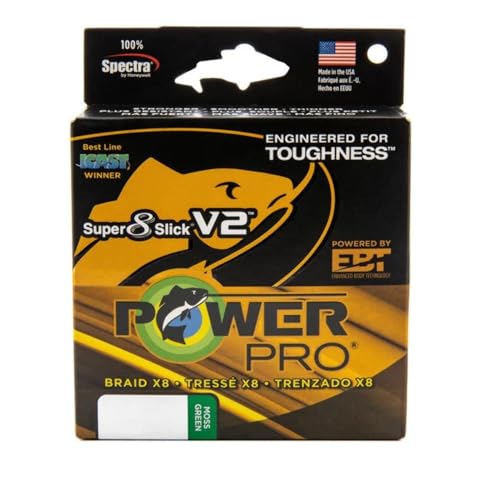
PowerPro Super 8 Slick V2 Braid
The standard braid recommendation for inshore saltwater fishing. Eight-strand construction produces a rounder, smoother profile that casts farther than 4-strand alternatives and resists wind knots in tough conditions. Zero stretch means you feel bites instantly.
- 8-strand weave outperforms 4-strand for distance and smoothness
- Zero stretch for instant bite detection and hooksets
- Thin diameter packs more line onto the reel
Best Baits for Beginners (Keep It Simple)
Three natural baits catch saltwater fish everywhere on the East and Gulf Coasts, and they're all cheap or free:
Fresh shrimp — The most universal saltwater bait. Works for flounder, redfish, speckled trout, pompano, sheepshead, striped bass, snook, and a dozen other species. Hook through the tail with the point coming out the back. Buy at any coastal bait shop the day you fish. Fresh trumps frozen — frozen shrimp falls apart quickly in current.
Cut menhaden or mullet — Oily baitfish that release a powerful scent slick in current. Best for larger predators: striped bass, red drum, bluefish, and cobia. Cut into 2–3 inch chunks, hook once with a 3/0–5/0 circle hook, and let it soak on the bottom. The scent does the work.
Sand fleas (mole crabs) — Free if you're fishing a sandy beach. Dig in the wet sand as waves recede and look for V-shaped bubbles. Thread 2–3 on a 1/0–2/0 circle hook. The #1 bait for pompano and excellent for redfish, whiting, and stripers. You genuinely cannot buy a better pompano bait than the ones you dig yourself.
Artificial option: Berkley Gulp! Saltwater Shrimp absorbs seawater and releases a scent nearly identical to live shrimp. It's the best artificial bait for beginners who can't always get to a bait shop — rig on a 1/4 oz jig head and fish it like live shrimp. Find it by searching "Berkley Gulp Saltwater Shrimp" on Amazon.
3 Simple Rigs That Work Everywhere
Fish-Finder Rig
A pyramid sinker slides freely on your main line above a barrel swivel. Tie 18 inches of fluorocarbon leader to the swivel, then attach a circle hook. Cast it out, let the sinker hold the bottom, and the bait drifts naturally in the current. Fish pick up the bait and swim off — the sinker doesn't move, so they feel no resistance and keep going. This is the go-to rig for surf and pier fishing for any bottom species.
Popping Cork + Jig
A popping cork (a floating bobber that rattles and splashes when twitched) sits above an 18–24" leader ending in a 1/4 oz jig head with a soft plastic shrimp. Twitch the rod tip every few seconds. The noise attracts fish from distance. Deadly for speckled trout and redfish over shallow grass flats.
Knocker Rig
An egg sinker sits directly on the hook eye — no leader between the sinker and the hook. The sinker "knocks" on rocks and structure, making noise that attracts fish. Simple to rig, effective around docks, rocky shorelines, and bridge pilings.
Where to Fish (No Boat Required)
The best shore access points for beginners are: public fishing piers, jetties at inlet mouths, sandy beaches (surf fishing), and bridge catwalks on larger bridges over tidal water. All of these put you over moving water, structure, and fish — without a boat or guide.
When scouting a new spot, look for:
- Structure — pilings, rocks, drop-offs. Bait fish hold here, and predators follow.
- Current — moving water moves bait. Fish face into current and wait for food to come to them.
- Low light windows — dawn and dusk consistently produce more fish than midday.
- Tidal movement — fish the two hours of incoming and two hours of outgoing around high tide. Slack tide (right at high or low) is typically slow.
Basic Tips That Make a Real Difference
Use circle hooks. Circle hooks set themselves when a fish runs with the bait — just reel down slowly and let the line come tight. Don't jerk the rod. Circle hooks reduce gut-hooking (which harms fish you want to release) and actually land more fish than J-hooks for beginners because they don't require a precise hookset.
Rinse your gear after every trip. Salt crystallizes inside reels and destroys drag systems within a season if you don't rinse them. Run fresh water over the rod and reel (kitchen faucet works fine), open the bail and rinse inside, dry it, and loosen the drag before storing. Takes five minutes and doubles the life of your gear.
Check regulations before you fish. Most coastal states require a saltwater fishing license (separate from freshwater). Many species have size and bag limits. The fines for violations are steep. Your state's fish and wildlife website has current regs — read the quick summary for your target species.
Start simple. One rig, one bait, learn one spot. Beginners who show up with 15 different lures and switch every five minutes rarely outfish anglers who pick one productive setup and work it confidently. Confidence in a bait and location matters.
Inshore vs. offshore: This guide covers inshore fishing — the kind you can do without a boat from beaches, piers, and shorelines. Offshore fishing (targeting tuna, mahi, marlin 10+ miles out) is a different world that requires a charter or large vessel. Start inshore and build from there.
Complete Beginner Saltwater Starter Kit
| Item | Pick | Est. Cost |
|---|---|---|
| Rod & Reel Combo | Penn Battle IV (3000–4000 inshore, 5000 surf) | ~$160 |
| Mainline | 20 lb mono or PowerPro Super 8 Slick braid | ~$15 |
| Hooks | Circle hooks 1/0–3/0, pack of 25 | ~$7 |
| Sinkers | Pyramid sinkers 2–3 oz assorted | ~$8 |
| Swivels | Barrel swivels, size 1–3, pack of 20 | ~$5 |
| Leader | 20–30 lb fluorocarbon, 30-yd spool | ~$12 |
| Bait | Fresh shrimp (bait shop day-of) | ~$6/lb |
| License | State saltwater fishing license | $15–$35 |
| Total | ~$228 |


