
Surf fishing is one of the most accessible forms of saltwater angling — no boat required, no guide needed, and the water is always free to fish. But walking up to the beach with the wrong gear means spending a full day getting beaten by waves without landing a fish. This guide covers the exact setup that works for beginners.
Total budget to start: A complete functional surf setup — rod, reel, line, terminal tackle, and first trip's bait — runs $150–$250. The recommendations here are chosen specifically for beginners who want quality without overspending.
The Rod
Surf rods are long — 9 to 12 feet — because length equals casting distance, and getting your bait past the breaking waves is the most critical variable in surf fishing. A 10-foot medium-heavy rod is the best starting point. Long enough to clear most surf zones, powerful enough to handle the sinker weight and the fish.
For most East Coast species (stripers, redfish, bluefish, pompano), a 10ft medium-heavy rod casts 2–4 oz sinkers comfortably and handles any fish you'll realistically encounter from shore.

Ugly Stik Carbon Surf Spinning Rod
Built specifically for surf fishing. Carbon construction keeps it light enough to cast all day, while the stainless guides and classic Ugly Stik durability handle constant salt and sand exposure without issue.
- Designed for distance casting over breaking waves
- Stainless steel guides resist saltwater corrosion
- Ugly Stik's legendary durability — nearly indestructible
- Available in multiple lengths and power ratings
The Reel
Surf reels get hit with sand, salt spray, and UV constantly. You need a sealed reel with at least 6000 series capacity to hold enough line for long casts and running fish. Don't buy a freshwater-spec reel and expect it to survive a season of surf fishing — the internals corrode within a few trips if they're not built for the environment.

Penn Battle IV Spinning Reel
The best-value surf reel at this price point. Full metal body, sealed drag system, and the proven Penn Battle platform that's been abused on beaches for years. Available in multiple series sizes — go with a 5000 or 6000 for surf.
- Full metal body — no flex under load from big fish
- HT-100 carbon fiber drag — smooth and powerful
- 6+1 sealed bearings for smooth retrieves
- CNC gear technology for precise mesh under pressure
Line Setup
Most experienced surf anglers use a braid mainline with a mono leader. Braid gives you higher strength at thinner diameter, letting you pack more line on the reel and cast farther with less wind resistance. 20–30 lb braid (roughly the diameter of 6 lb mono) is the standard. Connect a 24–36 inch leader of 20–30 lb monofilament with a uni-to-uni knot or a small barrel swivel.
If you want to start simpler, 20 lb monofilament straight through works fine for beginners — no leader knots, fewer tangles, easier to manage in wind. Switch to the braid-plus-leader setup once you've got a few sessions behind you.
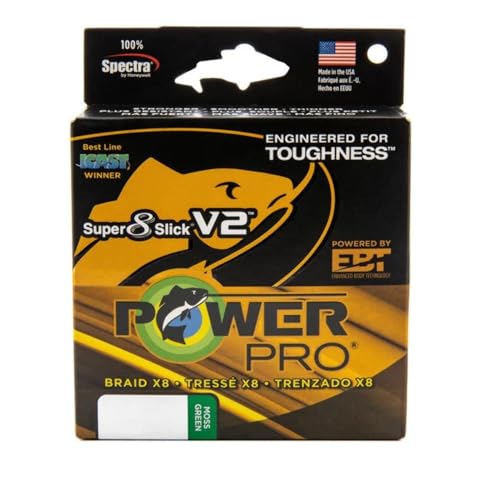
PowerPro Super 8 Slick V2 Braid
The 8-strand construction gives a rounder, smoother braid that casts farther than standard 4-strand line — exactly what you want for surf fishing where every extra foot of distance counts. Zero stretch means you'll feel bites through wave action.
- 8-strand weave casts farther than 4-strand braid
- Zero stretch for instant hooksets
- Available in multiple line weights and colors
Basic Surf Rigs
Fish-Finder Rig
Learn this one first — it's the most versatile surf rig in existence. A pyramid sinker slides freely on the main line above a barrel swivel, which connects to a 12–18 inch fluorocarbon leader and hook. The sinker holds the bottom in current while the bait moves naturally. Fish pick up the bait and run without feeling the sinker's resistance. Use 2–4 oz pyramid sinkers depending on current strength and wave height.
High-Low Rig (Double Drop)
Two hooks at different heights on the same rig, both fishing near the bottom. Good for smaller species — whiting, spot, flounder — when you want to cover two depth zones at once and double your shot at a bite. Tie your own or buy pre-rigged versions at any bait shop.
Read the beach before you cast. Look for cuts (dark water where sandbars gap and current channels form), rip currents, and the deeper trough just behind the first line of breaking waves. These are where baitfish concentrate and predators feed. A cast into a cut between sandbars will outperform a random cast into flat open beach every time.
Best Bait for the Surf
Sand fleas (mole crabs) — The #1 surf bait on the East Coast, and they're free. Collect them along the waterline as waves recede — look for small V-shaped bubbles in the wet sand. Thread 2–3 on a 1/0–2/0 circle hook. Pompano, redfish, whiting, and stripers all eat sand fleas.
Fresh shrimp — Produces everywhere and is easy to find at any bait shop. Hook through the tail with the point coming out the back for a more natural presentation. Buy fresh, not frozen — frozen shrimp disintegrates quickly in waves and current.
Cut menhaden / mullet — For larger species. Cut into 2–3 inch sections and soak on the bottom. The oil from fresh oily fish disperses in current and pulls predators in from long distances. Best for stripers, red drum, and bluefish.
When to Fish
Tide matters more than time of day. Fish the two hours either side of high tide — the incoming tide pushes bait toward the beach, and fish follow. The outgoing tide concentrates fish in cuts and channels as water drains through gaps in sandbars. Dead low tide is usually slow.
Dawn and dusk consistently produce more fish than midday, especially in summer when water temperatures force fish deeper during the afternoon. If you can only fish one window, dawn on an incoming tide is the highest-percentage surf session you can plan.
| Item | Recommendation | Est. Cost |
|---|---|---|
| Rod | Ugly Stik Carbon Surf Spinning Rod | ~$130 |
| Reel | Penn Battle IV (5000–6000 series) | ~$110 |
| Mainline | 20 lb mono or 20 lb braid + mono leader | ~$15 |
| Sinkers | Pyramid sinkers, 2–4 oz assorted pack | ~$8 |
| Hooks | Circle hooks 1/0–3/0, pack of 20 | ~$6 |
| Total | ~$209 |
Common Beginner Mistakes
Casting too far. Fish regularly feed in the wash — the white water right where waves break — and in the trough directly behind the first sandbar, which is often only 30–50 feet out. You don't need a 100-yard cast to find fish.
Not rinsing gear after every session. Saltwater destroys reels and rods. Rinse everything thoroughly with fresh water, including running fresh water through the reel bail mechanism, after every trip. Take 10 minutes and your gear will last years longer.
Using the wrong sinker weight. If waves are rolling your sinker around the bottom, go heavier. A sinker that moves means your bait is moving — fish that find your bait and then have it swing away don't come back for a second look.
The Verdict
Start with the Penn Battle IV on an Ugly Stik Carbon Surf Spinning Rod, 20 lb braid or mono, a fish-finder rig, and fresh shrimp or sand fleas. Fish the incoming tide at dawn. That's the complete functional setup — everything else is refinement that comes with experience.


