
Saltwater fishing eats inferior gear for breakfast. Salt corrodes bearings, seizes drags, and pits rod guides. A freshwater combo that costs the same as a proper saltwater setup can fail within its first season in the ocean — and often does. This guide cuts through the noise and tells you exactly what to buy based on where and how you're fishing.
The recommendations here are chosen for beginners: straightforward to use, durable enough to handle the saltwater environment, and priced so you're not gambling hundreds of dollars on gear before you know what you want.
Before picking a rod and reel, decide where you're fishing: Pier or inshore (7–8 ft rod, 3000–4000 series reel) versus surf beach (10–12 ft rod, 5000–8000 series reel). Your fishing style matters more than your budget when it comes to getting the right setup.
What Makes a Saltwater Rod and Reel Different
Not all fishing gear is built to the same standard, and saltwater is a far more demanding environment than freshwater. Here's what separates saltwater-specific equipment from everything else:
Reels need:
- Sealed bearings — unsealed bearings corrode quickly in salt spray
- Corrosion-resistant body material — aluminum or stainless, not zinc or bare steel
- Saltwater-rated drag washers — HT-100 carbon fiber or similar
- Sealed or water-resistant drag system — especially critical for surf fishing where reels take direct wave exposure
Rods need:
- Stainless steel or aluminum oxide guides — chrome guides pit quickly in salt
- Corrosion-resistant reel seat and ferrules
- Appropriate length and power rating for casting sinker weight over waves (for surf) or managing inshore species
The rinse rule: Even gear marketed as "saltwater" needs a thorough freshwater rinse after every single trip. Salt crystalizes as it dries and works into drag systems, guide frames, and bail mechanisms. A 60-second rinse after every trip extends reel life by years.
Best Budget Setup: Penn Battle IV Combo (~$150–$180)
For most beginners, this is the recommendation. The Penn Battle IV is one of the most reviewed saltwater spinning combos on Amazon for a reason: it delivers performance that used to cost twice as much. Full metal body, sealed drag, and the proven Penn Battle platform that's been fished hard on beaches, piers, and inshore flats for years.

Penn Battle IV Spinning Combo
The most trusted beginner saltwater combo on the market. Full metal body prevents flex under heavy loads. HT-100 carbon fiber drag washers — the same system found in Penn's $300+ reels — deliver smooth, powerful drag performance. The graphite rod included in the combo handles most inshore and pier applications comfortably.
- Full metal body — no reel flex under pressure
- HT-100 carbon fiber drag washers
- 6+1 sealed bearings for smooth, corrosion-resistant retrieves
- CNC gear technology for precise mesh under load
- 4,100+ reviews as a combo — one of Amazon's most-reviewed saltwater setups
Which size to get:
- 3000–4000 series: Pier fishing, inshore fishing, flats, kayak — any situation where you're not throwing heavy sinkers or fighting strong current
- 5000–6000 series: Surf fishing, targeting larger species, situations where you need more line capacity and drag power
Best Mid-Range Reel: Shimano Stradic FL (~$180–$200 Reel Only)
Once you know you'll be fishing saltwater regularly, the Shimano Stradic FL is where most serious anglers land. X-Protect water resistance makes it genuinely water-tight — not just "water resistant" as a marketing claim. Hagane cold-forged gears are measurably smoother and more durable than the die-cast gears found in most reels at this price point.
Shimano Stradic FL 4000
Shimano's X-Protect technology creates a water-tight seal that stands up to wave splash and rain. The Hagane cold-forged gearing gives you a retrieve that feels noticeably smoother than the competition at this price. Infinity Drive reduces the force needed to crank on hard-fighting fish. This is a reel you'll still be fishing a decade from now.
- X-Protect water resistance — genuinely water-tight under normal fishing conditions
- Hagane cold-forged gears — vastly smoother and more durable than die-cast
- Infinity Drive reduces cranking effort on large, hard-fighting fish
- CI4+ body — extremely light without sacrificing rigidity
- Long-term investment in a reel built to last
The Stradic FL is sold as a reel only. Pair it with the Ugly Stik Carbon Surf Rod for a surf setup, or a quality 7 ft medium-heavy spinning rod (St. Croix Mojo Inshore, G. Loomis E6X) for inshore fishing.
Best Surf Rod: Ugly Stik Carbon Surf Spinning Rod (~$90–$130)
If you're fishing the surf rather than a pier or inshore flat, your rod choice is the most important decision in the setup. The Ugly Stik Carbon Surf Rod is built specifically for surf casting — it's not an inshore rod repurposed for the beach. The carbon blank is light enough to cast all day, handles sinker weights up to 6 oz, and the stainless steel guides resist the saltwater corrosion that destroys lesser rods within a season.

Ugly Stik Carbon Surf Spinning Rod
A true surf rod, not a repurposed inshore setup. The carbon construction keeps it lighter than comparable fiberglass rods, while Ugly Stik's legendary clear tip gives you excellent sensitivity for detecting bites on bottom-soaking rigs. Handles 2–6 oz surf rigs with ease. Best paired with Penn Battle IV 5000–6000 series for a complete surf setup.
- Purpose-built for surf casting — handles 2–6 oz sinkers
- Carbon construction: lighter than fiberglass, more durable than graphite
- Stainless steel guides resist saltwater corrosion season after season
- Ugly Stik clear tip: exceptional sensitivity for detecting light bites
- Nearly indestructible — known for surviving accidents that break other rods
Complete Setup Recommendations by Scenario
| Fishing Type | Rod | Reel | Est. Total Cost |
|---|---|---|---|
| Pier / Inshore Beginner | Penn Battle IV Combo Rod (included) | Penn Battle IV 3000–4000 (combo) | ~$160 |
| Surf Beginner | Ugly Stik Carbon Surf 10 ft | Penn Battle IV 5000 | ~$240 |
| Inshore Mid-Range | 7 ft MH Spinning Rod (various) | Shimano Stradic FL 4000 | ~$220+ |
| Surf Mid-Range | Ugly Stik Carbon Surf 10 ft | Shimano Stradic FL 5000 | ~$290 |
What Line to Put on Your New Setup
The rod and reel are only half the equation. The right line ties the whole setup together. For all the setups above, use the same line configuration:
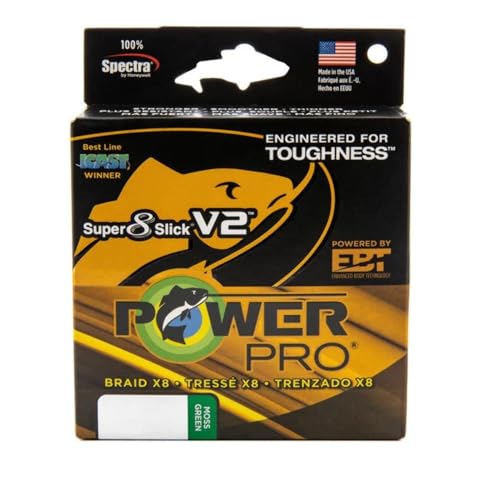
- Mainline: 20 lb PowerPro Super 8 Slick V2 braid — thin diameter for long casts, zero stretch for immediate bite detection
- Leader: 24–30 inches of 20–30 lb fluorocarbon, connected to the braid with an FG knot or uni-to-uni knot
PowerPro Super 8 Slick V2 Braid
The 8-strand construction produces a rounder, smoother line profile than standard 4-strand braid, resulting in noticeably farther casts and less wind knots. Standard recommendation for all inshore and surf setups — over 7,200 reviews validate it as the default choice for saltwater braid.
- 8-strand weave for maximum casting distance
- Zero stretch for instant hooksets
- Available in moss green (low-vis) and hi-vis yellow
Frequently Asked Questions
Can I use a freshwater rod in saltwater?
Short answer: no. A session or two won't destroy it, but the chrome guides pit and rust, the reel seat corrodes, and any unsealed ferrules start to show damage quickly. Purpose-built saltwater rods use stainless or aluminum oxide guides and corrosion-resistant hardware throughout. Using freshwater gear is a false economy that costs more in replacements than just buying the right rod from the start.
What size reel do I need for saltwater fishing?
For pier and inshore fishing, a 3000–4000 series spinning reel handles most species from snook and redfish to flounder and trout. For surf fishing, step up to 5000–6000 to get more line capacity and drag power for long casts and larger fish. If you're targeting very large species like tarpon or big bluefish runs, a 6000–8000 series gives you more headroom.
Should I get a baitcaster for saltwater?
Not for your first setup. Baitcasters require more skill to cast without backlashing, and learning to manage a baitcaster on top of learning surf or inshore fishing adds unnecessary difficulty. Start with a spinning reel — it's more forgiving, casts a wider range of lure and sinker weights, and is faster to get proficient with. Switch to a baitcaster later if you want precision inshore casting.
How do I maintain my saltwater reel?
After every trip: rinse with fresh water, run fresh water through the bail and line roller mechanism, dry with a cloth, loosen the drag to relieve pressure on the drag washers, and store in a dry location. Every 3–5 trips, apply a single drop of reel oil to the line roller. Once or twice a season, apply grease to the main gear train (this requires opening the reel — consult your model's service instructions). That's it. The rinse after every trip is by far the most important maintenance step.
The Verdict for Beginners
The clearest path to a working saltwater setup that won't fail you:
- For pier and inshore: Penn Battle IV Combo (3000 or 4000 series) + 150 yards of 20 lb PowerPro Super 8 Slick V2 braid + 24-inch 20 lb fluorocarbon leader
- For surf fishing: Ugly Stik Carbon Surf 10 ft + Penn Battle IV 5000 series + same line setup above
- Upgrade path: Once you know what and where you're fishing, the Shimano Stradic FL paired with a dedicated rod for your application is a setup that lasts a decade
Need a complete list of everything else you need for your first saltwater trip? See our Beginner Saltwater Fishing Gear Checklist for hooks, sinkers, tools, bait, and license information in one place.


