
Bluegill have small mouths. That one fact drives every hook-size decision you'll make when targeting them. Use a hook that's too big and fish will steal your bait without getting hooked. Use one that's too small and you'll be throwing back swallowed hooks all day. Here's the practical answer.
Quick answer: Use a size 8 Aberdeen hook for general bluegill fishing with live bait (worms, crickets). Drop to size 10 for small bait or pressured fish. Go up to size 6 if you're specifically targeting the largest bull bluegill in a lake.
Understanding Hook Size Numbers
Hook sizing is counterintuitive: the larger the number, the smaller the hook. A size 10 hook is smaller than a size 6. This trips up beginners constantly. Once you go past size 1, the system switches — 1/0, 2/0, 3/0 — where a larger number means a larger hook. For bluegill, you're almost always working in the size 6 to size 12 range.
| Hook Size | Best For | Bait Match | Notes |
|---|---|---|---|
| Size 6 | Large bull bluegill | Big nightcrawlers, large crickets | Too large for average-sized fish |
| Size 8 | All-purpose bluegill | Worms, crickets, wax worms | Best starting point — covers most situations |
| Size 10 | Pressured or small fish | Small worm pieces, maggots, small crickets | More bites, harder to keep bait on |
| Size 12 | Ultra-finesse, fly fishing | Maggots, small soft plastics | Specialty use — most anglers won't need this |
Best Hook Style for Bluegill
The Aberdeen hook is the standard for bluegill and panfish. The long shank makes it easy to remove from small fish without deep hooking, and the light wire bends before it breaks — which matters when you're snagged on a dock post. The thin wire also keeps live bait (worms, crickets) alive longer because it causes less trauma to the bait.
Avoid wide-gap and circle hooks for small bluegill. Wide-gap hooks have too much space between the point and shank — bluegill can't generate enough bite force to drive the point home. Circle hooks are excellent for larger species but overkill here.
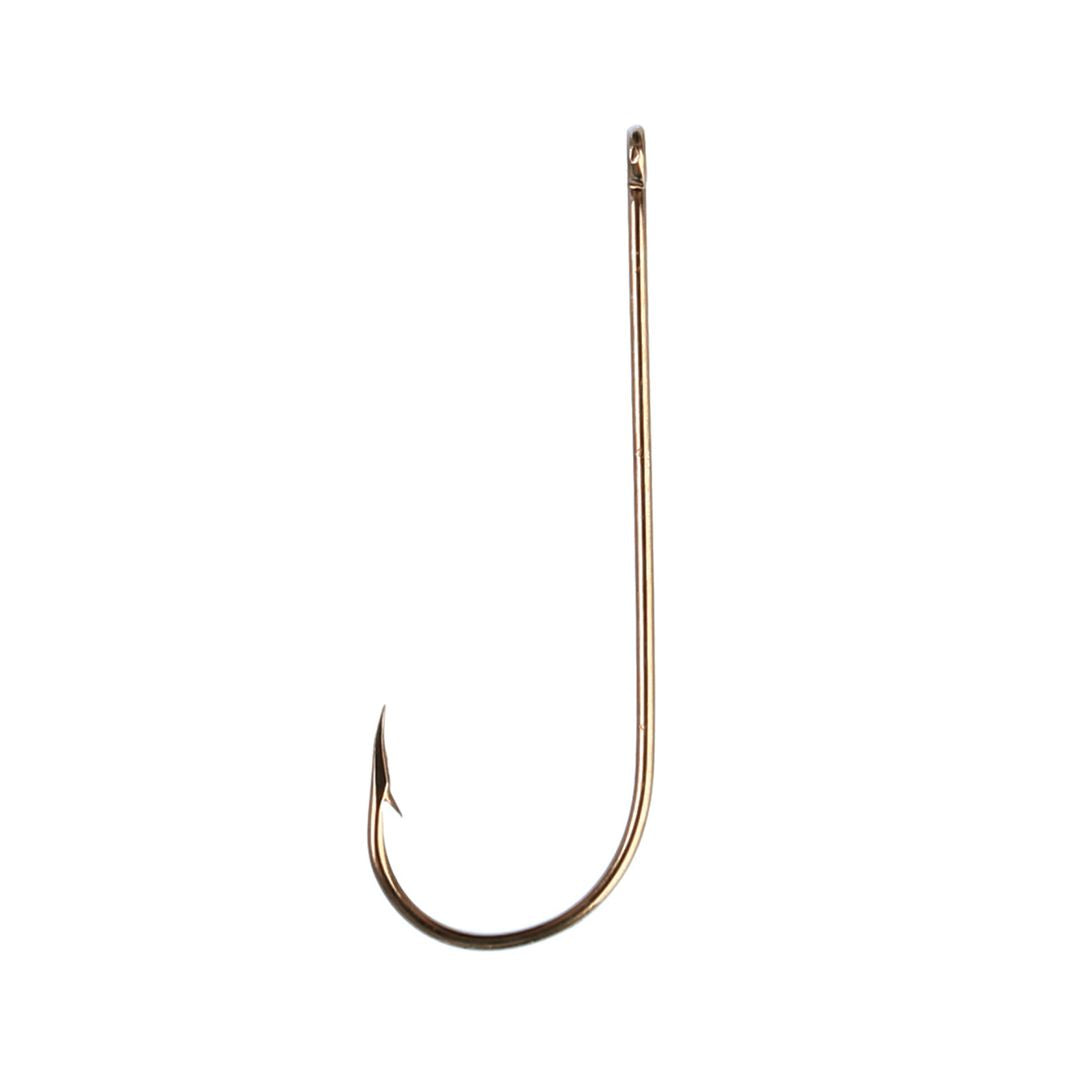
Eagle Claw Aberdeen Hooks — Size 8, 10 Pack
The industry standard Aberdeen hook for panfish. Light wire, long shank, easy to remove from small fish. Keep a few packs on hand — you'll lose plenty to dock posts and sunken timber.
- Light wire stays sharp and bends on snags (not breaks)
- Long shank for easy hook removal — less deep hooking
- Keeps live bait alive longer than heavy-wire hooks
- Comes pre-sharpened from the factory
Matching Hook Size to Bait
Nightcrawlers: Use a size 8. Thread a 2-inch piece onto the hook with the end dangling — this is more enticing than a solid worm ball and triggers more bites. Size 6 if you're using a full crawler and targeting the biggest fish in the lake.
Crickets: Size 8. Hook through the back of the thorax just behind the head. This keeps the cricket alive and kicking, which is most of the appeal as bait. Size 10 if your crickets are small.
Wax worms: Size 10. Wax worms are small. Match the hook size to the bait — a size 8 will overwhelm a wax worm and reduce the natural presentation.
Small soft plastics: Size 8 or 10 depending on the plastic. A 1-inch grub on a size 8 jig head is one of the most effective bluegill setups ever made. Simple and cheap.
Jig heads for bluegill: A 1/32 oz or 1/64 oz jig head paired with a 1-inch curly tail grub will out-produce live bait in warm water. Use chartreuse or white in stained water, natural shad colors in clear water. Dead-stick it near structure — let it barely move.
How to Rig for Bluegill
The classic bluegill rig is a float (bobber), a split shot 12 inches above the hook, and a size 8 Aberdeen with a worm piece. Set the float depth so your bait is 1–2 feet off the bottom, or just off the top of underwater vegetation. This is the setup that has caught more bluegill than everything else combined.
If you're fishing without a float, add a small split shot 8–10 inches above the hook to keep the bait down. Bluegill are ambush feeders holding in structure — getting the bait in front of their face is more important than covering water.
Where to Find Bluegill
Hook size won't matter if you're not fishing the right spots. Bluegill hold tight to structure year-round:
- Dock pilings — shade and structure, almost always holding fish
- Weed edges — especially where thick weeds meet open water
- Fallen timber — any submerged log is worth a cast
- Shallow points — especially in spring and early summer during spawning season
In summer, bluegill move slightly deeper during midday heat. Fish the early morning and evening in shallow areas and you'll find them in numbers.
Frequently Asked Questions
What size hook is best for bluegill?
A size 8 Aberdeen hook is the best all-purpose choice for bluegill fishing. It works with worms, crickets, and wax worms and fits the mouth size of average bluegill well. Drop to size 10 for smaller bait or finicky fish, and go up to size 6 when targeting big bull bluegill with large bait.
Is a size 6 hook too big for bluegill?
A size 6 hook is on the large end for average bluegill, but it works well when specifically targeting bull bluegill — the largest fish in a given lake — with big nightcrawlers or large crickets. For average-sized bluegill, a size 8 is a better fit and will result in more successful hooksets.
What type of hook is best for bluegill?
An Aberdeen hook is the best hook style for bluegill. The long shank makes hook removal easy from small fish, the light wire keeps live bait alive longer, and it bends rather than breaks when snagged on structure. Avoid wide-gap or circle hooks — bluegill cannot generate enough bite force to drive those hook styles home reliably.
Can you use a size 10 hook for bluegill?
Yes, a size 10 Aberdeen is a good choice for bluegill, especially with small bait like wax worms, small crickets, or maggots. It also works well in clear, pressured water where fish are biting light and short. The downside is that small hooks can be harder to bait and easier to lose in the fish's throat.
What pound test line should I use for bluegill fishing?
4 to 6 lb monofilament is ideal for bluegill fishing. It's light enough that the hook and bait move naturally, and strong enough to handle even the largest bluegill without issue. Heavier line is not needed and can reduce bites in clear water.
Bottom Line
Start with a size 8 Aberdeen hook and a live worm. That combination catches bluegill in every lake in North America. Once you've caught a few fish and understand the size of the fish in your specific water, adjust up to a size 6 if you want bigger fish, or down to a size 10 if fish are stealing bait and you're not converting bites. Keep it simple — bluegill aren't complicated.


